

-
Original Article
-
PERFORMANCE ANALYSIS OF A RECTANGULAR SUPERSONIC AIR INTAKE BASED ON A TWO-DIMENSIONAL APPROXIMATION WITH NUMERICAL VALIDATION
사각단면 초음속 공기 흡입구의 2차원 근사 성능 예측 및 수치적 검증
-
H. Lee, C.W. Jeong, J.S. Park
이하은, 정채원, 박진석
- In this paper, a Python-based code was developed to predict the approximate performance of two-dimensional supersonic air inlets with a rectangular cross …
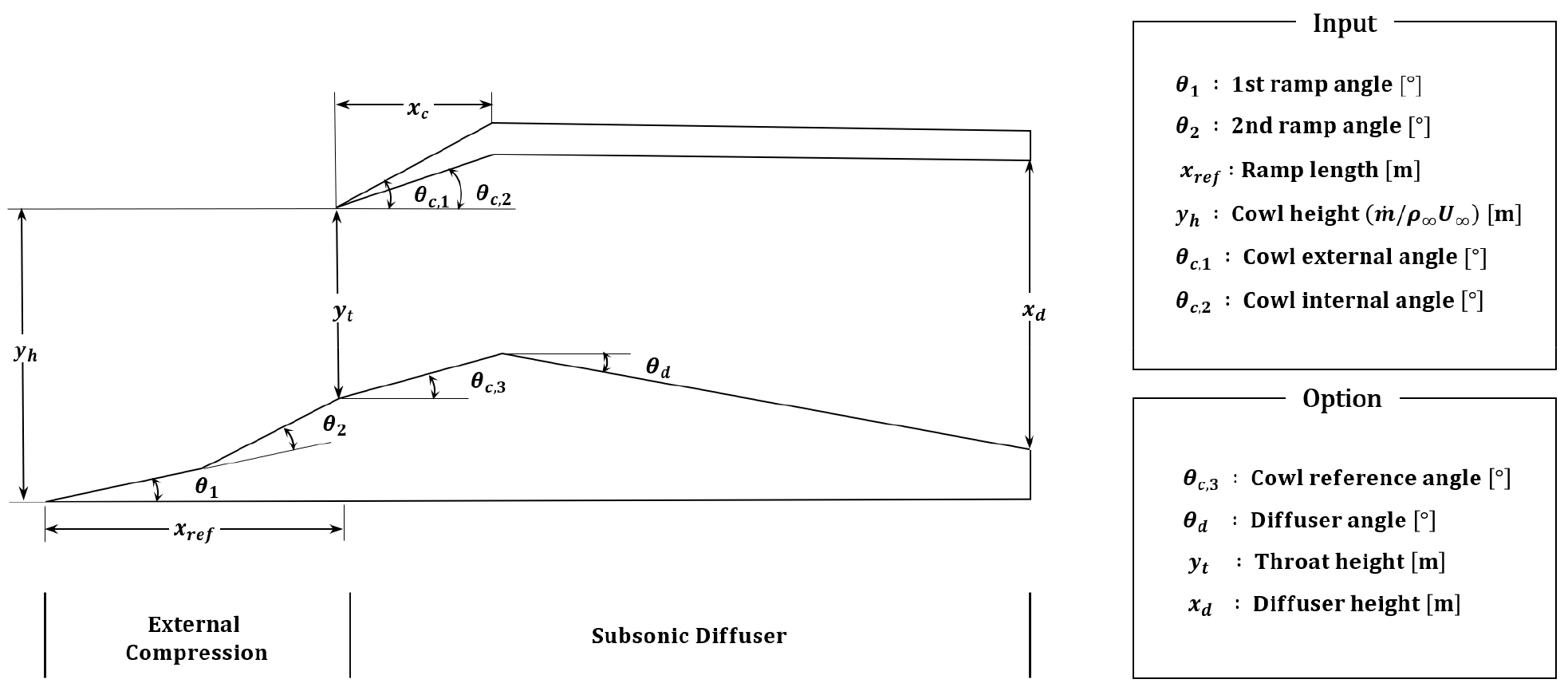
- In this paper, a Python-based code was developed to predict the approximate performance of two-dimensional supersonic air inlets with a rectangular cross section based on compressible flow theory. The code efficiently evaluates the aerodynamic characteristics of the external compression region of multi-ramp supersonic inlets by computing the flow properties in each compression section using oblique and normal shock relations derived from user-defined geometric parameters, and automatically generates inlet configurations that satisfy a target total pressure recovery. Since the theoretical approach relies on inviscid assumptions, it may overestimate inlet performance under practical operating conditions. To address this limitation, Reynolds-Averaged Navier–Stokes simulations were conducted for selected optimal configurations to validate the preliminary design results and to quantify the degradation of total pressure recovery due to viscous effects. In addition, three-dimensional effects and the effectiveness of boundary-layer bleed devices were examined to further assess their influence on inlet performance. - COLLAPSE
-
PERFORMANCE ANALYSIS OF A RECTANGULAR SUPERSONIC AIR INTAKE BASED ON A TWO-DIMENSIONAL APPROXIMATION WITH NUMERICAL VALIDATION
-
Original Article
-
CFD ANALYSIS OF CABIN PRESSURIZATION EFFECTS INDUCED BY DIRCM INSTALLATION IN THE C-130H AIRCRAFT
C-130H 항공기 DIRCM 장비 부착에 따른 여압 특성 변화에 관한 전산해석 연구
-
S.B. Shin, J.S. Kim, K. Park, G. Kim, R.S. Myong, H. Lee
신승빈, 김진수, 박광, 김건, 명노신, 이학진
- This study performed unsteady Reynolds-Averaged Navier–Stokes (RANS) simulations to evaluate the effects of additional perforations caused by the installation of a Directional …
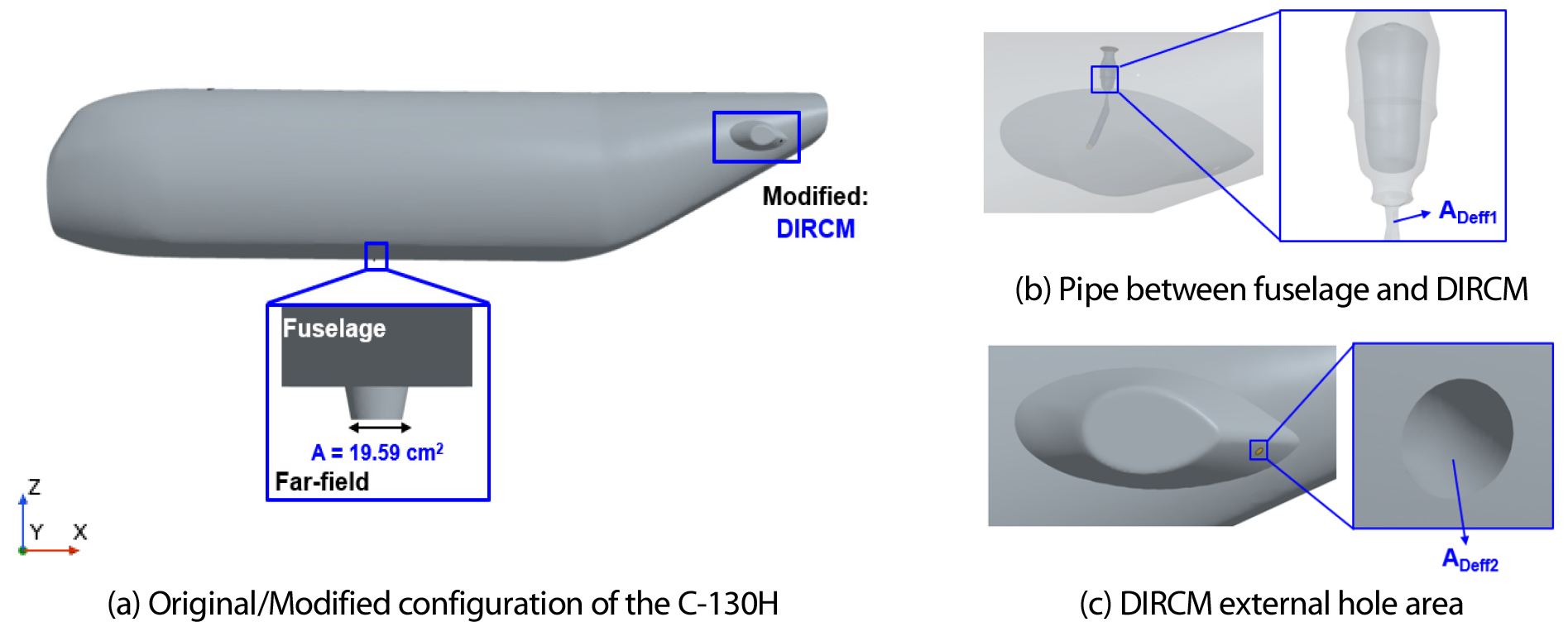
- This study performed unsteady Reynolds-Averaged Navier–Stokes (RANS) simulations to evaluate the effects of additional perforations caused by the installation of a Directional Infrared Counter Measures (DIRCM) system on the cabin pressurization characteristics of a C-130H aircraft. The equivalent leakage area was derived from full-scale pressure decay tests and incorporated into a modified numerical model that included DIRCM-mounted components and connecting ducts. Simulations were conducted under both ground and high-altitude flight conditions for the baseline and modified configurations to compare internal pressure and leakage flow characteristics. Under ground conditions, the baseline model accurately reproduced reference pressure trends, validating the computational approach. The modified model exhibited faster pressure decay due to increased leakage flow. Under flight conditions, applying the leakage flow rate from the ECS-off case as a compensatory inflow maintained cabin pressure, demonstrating the stabilizing effect of ECS operation. The actuator disk model used for the ECS fan reproduced localized flow acceleration near the fan disk but had minimal impact on overall mass balance. These results provide a quantitative basis for assessing pressurization performance following aircraft modifications. - COLLAPSE
-
CFD ANALYSIS OF CABIN PRESSURIZATION EFFECTS INDUCED BY DIRCM INSTALLATION IN THE C-130H AIRCRAFT
-
Original Article
-
AERODYNAMIC HEATING CHARACTERISTICS OF A WINGED ROBOTIC MODEL RE-ENTRY SPACE VEHICLE
Winged 로봇 모델 재진입 우주비행체의 공력 가열 특성
-
S.J. Hwang, Y.J. Jeon, K.W. Kim, R.S. Myong
황선재, 전용진, 김건우, 명노신
- Winged robotic reusable launch vehicles (RLVs) are designed to return to Earth after space missions for subsequent reuse. During atmospheric reentry, these …
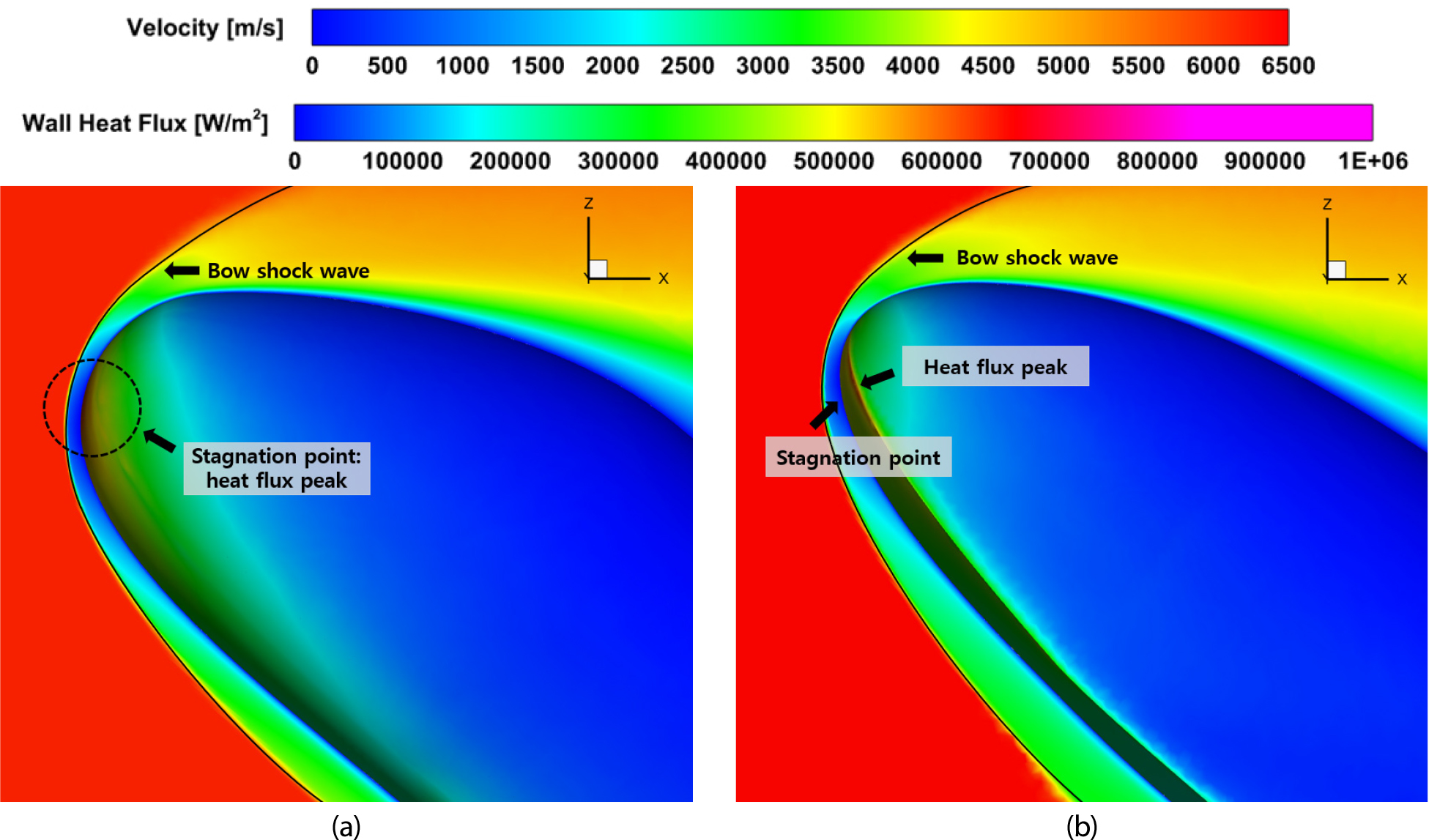
- Winged robotic reusable launch vehicles (RLVs) are designed to return to Earth after space missions for subsequent reuse. During atmospheric reentry, these vehicles travel at hypersonic speeds, leading to the formation of strong shock waves and extreme aerodynamic heating on their surfaces. A robust Thermal Protection System (TPS) is essential to protect the vehicle in such environments. In this study, aerodynamic heating characteristics in hypersonic reentry environments were investigated using STAR-CCM+. Computational simulations were performed for high-altitude flight conditions, employing a 5-species and 17-reaction chemical kinetic model. The analysis compared the JBNU Winged RLV with the U.S. X-37B orbital test vehicle. The results indicated that the highest heat fluxes occurred at the nose, wing leading edges, and stabilizers for the RLV, and at the nose and wing leading edges for the X-37B. The physical mechanisms underlying the high heat fluxes were analyzed to propose shape-based mitigation strategies. It was confirmed that applying a curved wing leading edge and incorporating a sweep angle into the stabilizer significantly reduced the peak heat flux. The modified vehicle demonstrated longitudinal static stability, as indicated by negative slopes across angles of attack of 30°, 40°, and 50°. - COLLAPSE
-
AERODYNAMIC HEATING CHARACTERISTICS OF A WINGED ROBOTIC MODEL RE-ENTRY SPACE VEHICLE
-
Original Article
-
NUMERICAL INVESTIGATION OF MOLTEN SALT SCATTERING UNDER AN INTERNAL TNT EXPLOSION SCENARIO IN A MICRO MOLTEN SALT REACTOR
초소형 용융염 원자로의 폭발 시나리오에서 용융염 완화입자의 비산 수치 해석
-
H.T. Kim, S.I. Kim, S.M. Chang
김형태, 김성일, 장세명
- This study numerically investigates molten salt dispersion induced by an internal TNT explosion in a truck-mounted micro molten salt reactor (MSR). An …
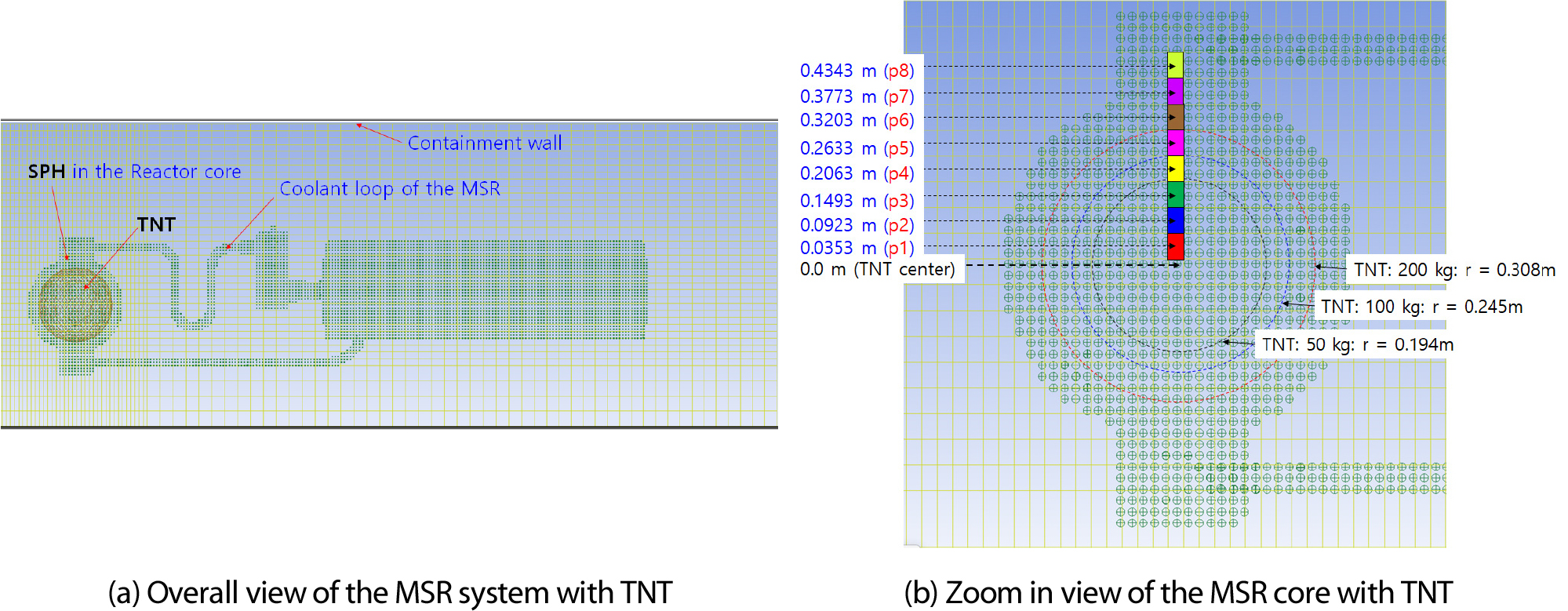
- This study numerically investigates molten salt dispersion induced by an internal TNT explosion in a truck-mounted micro molten salt reactor (MSR). An ALE-SPH coupled framework implemented in LS-DYNA was used to simulate blast wave propagation and the initial acceleration of molten salt for TNT charges up to 200 kg. The blast model was validated against the Sedov-Taylor similarity solution, demonstrating accurate self-similar scaling of shock radius and pressure decay. To enhance computational efficiency in predicting long-range transport, a hybrid strategy was adopted: the blast-dominated phase was resolved in LS-DYNA, while the subsequent ballistic phase was calculated using a Python-based solver incorporating gravity, aerodynamic drag, and wind effects. The results indicate that wind significantly increases the maximum scattering distance and modifies the spatial mass distribution; for the 200 kg TNT case at a 45° penetration angle, the maximum distance increased from 899 m under no-wind conditions to 982 m with a 5 m/s wind. - COLLAPSE
-
NUMERICAL INVESTIGATION OF MOLTEN SALT SCATTERING UNDER AN INTERNAL TNT EXPLOSION SCENARIO IN A MICRO MOLTEN SALT REACTOR
-
Original Article
-
SPREADING ANALYSIS OF SPILL SALT IN MSR USING ANSYS FLUENT
ANSYS Fluent를 이용한 용융염 원자로의 누출 용융염 퍼짐 해석
-
R.J. Park, S.M. An, H.T. Kim, S. Kim
박래준, 안상모, 김형태, 김성일
- As a part of small reactor developments for the GEN-IV (Generation IV) reactors, a MSR (Molten Salt Reactor) is selected for reactor …
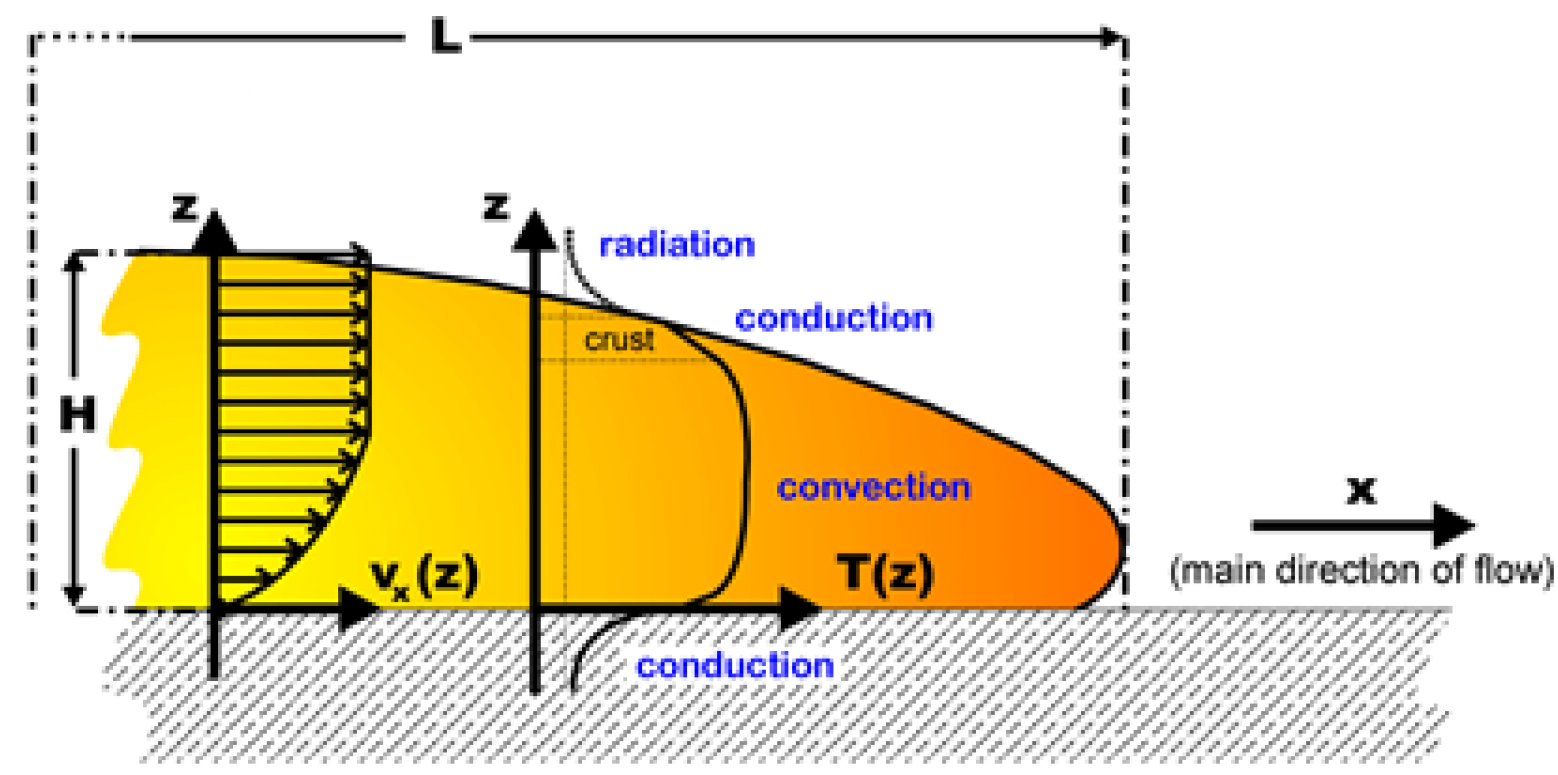
- As a part of small reactor developments for the GEN-IV (Generation IV) reactors, a MSR (Molten Salt Reactor) is selected for reactor technology and safety aspects worldwide. In a safety of the MSR, the most important thing is a loss of the molten fuel salt in the primary system. The spreading and heat transfer behavior of radionuclide-bearing molten salt directly and indirectly affect the distribution of radionuclides during and after a salt spill accident. For this reason, the spreading and cooling process of the spill molten salt is very important for MSR safety. Analysis on spreading distance of the spill molten salt as salt composition of KCl-NaCl-UCl3 for marine MSR or KCl-UCl3 for very small MSR has been performed using the ANSYS-Fluent computer code. In addition, effect of mass increase on spreading distance has been analyzed in spill molten salt accident. As the temperature of the leaked molten salt decreases due to heat transfer to the surroundings and reaches its solidification temperature, the liquid molten salt solidifies. It can be seen that KCl-NaCl- UCl3 with a solidification temperature of 724 K spreads more than KCl-UCl3 with a solidification temperature of 809 K. It can be seen that an increase in the flow rate of the leaking molten salt leads to increase in the spreading distance, but the increase is not proportional. The spreading distance is longer when a larger amount of the same mass leaks initially. - COLLAPSE
-
SPREADING ANALYSIS OF SPILL SALT IN MSR USING ANSYS FLUENT
-
Original Article
-
FLOW SEPARATION SUPPRESSION OF SWEPT SHOCK WAVE-BOUNDARY LAYER INTERACTION BY USING BLEED SLOTS OVER SUPERSONIC INLET SIDEWALL
초음속 흡입구의 측벽 블리드 슬롯을 이용한 후퇴 충격파-경계층 상호작용(SSWBLI) 유동의 박리 억제
-
E.C. Kim, S.H. Park
김은채, 박수형
- Shock Wave-Boundary Layer Interaction (SWBLI) is a major cause of flow instability and energy loss. Particularly in supersonic inlets utilizing shock waves …
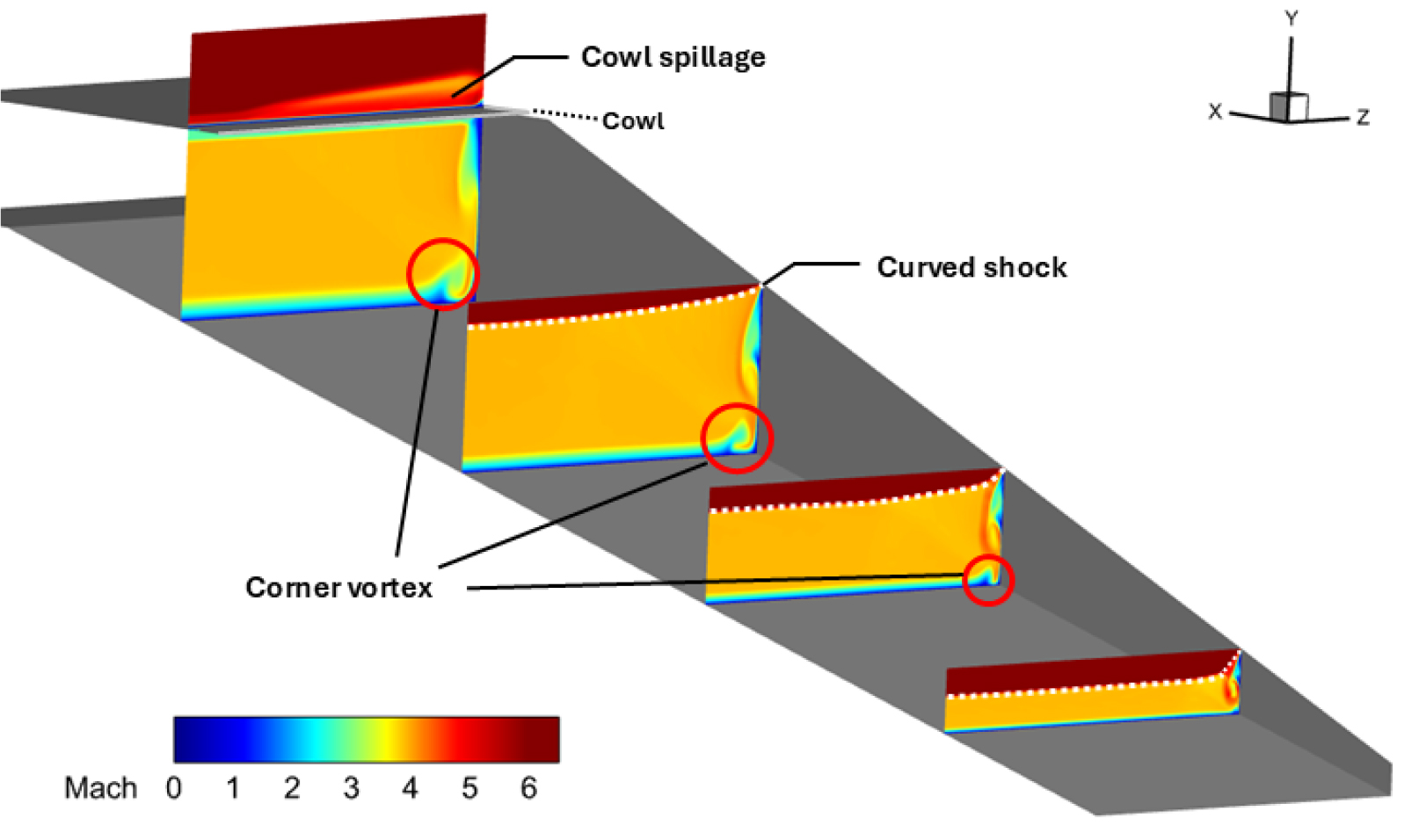
- Shock Wave-Boundary Layer Interaction (SWBLI) is a major cause of flow instability and energy loss. Particularly in supersonic inlets utilizing shock waves for compression, SWBLI reduces the effective flow area and degrades flow energy, significantly decreasing overall engine efficiency. While previous studies primarily focused on two-dimensional SWBLI, the necessity of understanding and controlling the three-dimensional Swept Shock Wave-Boundary Layer Interaction (SSWBLI) has recently emerged. When sidewalls are installed to ensure sufficient mass flow, SSWBLI inevitably occurs between the ramp-generated shock wave and the sidewall boundary layer. This forms a complex three-dimensional flow separation, an open radial vortex, which reduces the effective capture area and ingests low-energy flow, severely degrading inlet performance. Therefore, sidewall flow control is required to restore performance. In this study, Computational Fluid Dynamics (CFD) analysis was performed to investigate the three-dimensional sidewall separation in a Mach 6 hypersonic inlet. To mitigate this separation, a sidewall bleed slot was applied, and a parametric study was conducted based on its location and porosity. Ultimately, optimal bleed slot conditions were derived to effectively control the flow separation, demonstrating an improvement in overall inlet performance. - COLLAPSE
-
FLOW SEPARATION SUPPRESSION OF SWEPT SHOCK WAVE-BOUNDARY LAYER INTERACTION BY USING BLEED SLOTS OVER SUPERSONIC INLET SIDEWALL
-
Original Article
-
NUMERICAL STUDY OF MULTIPHASE FLOW IN TC-NCF BONDING
TC-NCF 접합 공정의 다상유동에 대한 수치적 연구
-
W. Choi, G. Son
최원준, 손기헌
- Thermo-compression (TC) bonding using non-conductive films (NCF) and micro solder bumps has became a key technology for interconnecting upper and lower chips …
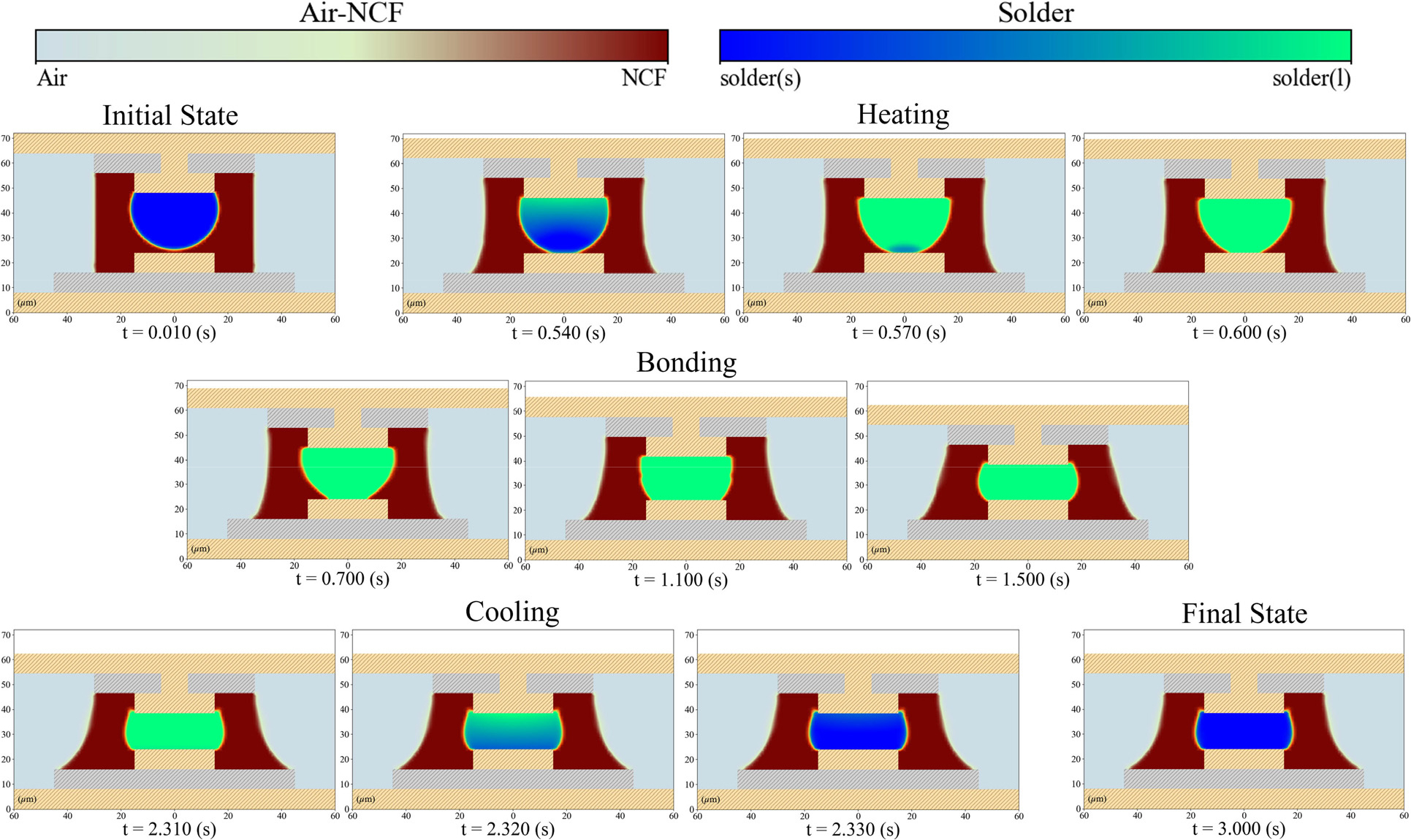
- Thermo-compression (TC) bonding using non-conductive films (NCF) and micro solder bumps has became a key technology for interconnecting upper and lower chips in high-bandwidth memory (HBM) packaging. In this study, a comprehensive numerical model is proposed to analyze the TC-NCF process by simultaneously considering solder phase change, wetting-driven flow, NCF curing kinetics, and interfacial evolution driven by the displacement of the upper chip. A Volume-of-Fluid (VOF) method is employed to capture the multiphase flow behavior among air, NCF, and solder, including wall wetting dynamics. The melting and solidification of solder are modeled using an enthalpy-based phase change approach, while the compression induced by the upper chip is represented through a dynamic mesh technique. The proposed model provides a quantitative framework for analyzing the coupled effects of process parameters and material properties, thereby offering a theoretical foundation for the design and optimization of thermo-compression bonding processes. - COLLAPSE
-
NUMERICAL STUDY OF MULTIPHASE FLOW IN TC-NCF BONDING
-
Original Article
-
THREE-DIMENSIONAL TRANSIENT MODELING OF CO2 BREAKTHROUGH IN AN ELM-11 PACKED BED WITH GATE-OPENING ADSORPTION
ELM-11 충전층의 Gate-Opening 기반 CO2 파과 거동에 대한 3차원 비정상 수치해석
-
T. Lee, S. Kim, B. Koo
이태호, 김성민, 구본찬
- A three-dimensional transient model was developed to investigate CO2 breakthrough in a pelletized ELM-11 fixed-bed adsorber. The model incorporates gate-opening adsorption …
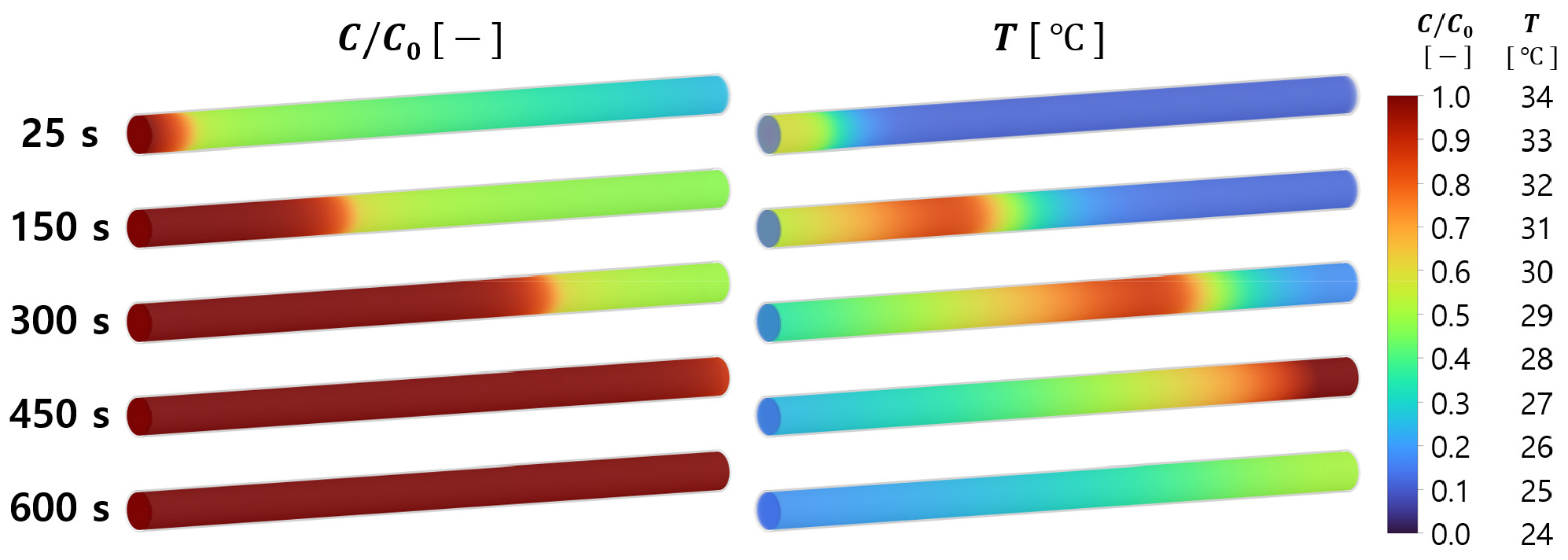
- A three-dimensional transient model was developed to investigate CO2 breakthrough in a pelletized ELM-11 fixed-bed adsorber. The model incorporates gate-opening adsorption equilibrium, linear driving force kinetics, and adsorption heat effects into mass, momentum, and energy conservation equations, and was validated against fixed-bed breakthrough experiments. The results reproduced the characteristic stepwise CO2 breakthrough and bed temperature response of ELM-11. Three-dimensional field analysis reveals that the initial breakthrough arises from CO2 slipping-off before full gate opening, while the subsequent plateau is governed by additional adsorption induced by local structural expansion. These findings clarify the gate-opening-driven breakthrough mechanism of ELM-11 and support the use of 3D transient modeling for flexible MOF-based CO2 capture design. - COLLAPSE
-
THREE-DIMENSIONAL TRANSIENT MODELING OF CO2 BREAKTHROUGH IN AN ELM-11 PACKED BED WITH GATE-OPENING ADSORPTION
-
Original Article
-
TWO-STEP CROSS-VARIABLE GAPPY POD FOR MULTI-SCALAR FIELD FROM SPARSE TEMPERATURE MEASUREMENTS IN TURBULENT COMBUSTION
2단계 교차 변수 Gappy POD를 이용한 난류 연소장의 희소 온도 측정 기반 다중 스칼라장 재구성
-
H. Yu, S. Kim, K.Y. Huh, D. You
유혜수, 김성범, 허강열, 유동현
- This study proposes the Two-step Cross-Variable Gappy POD to reconstruct multiple scalar fields from sparse temperature measurements. The method extracts the spatial …
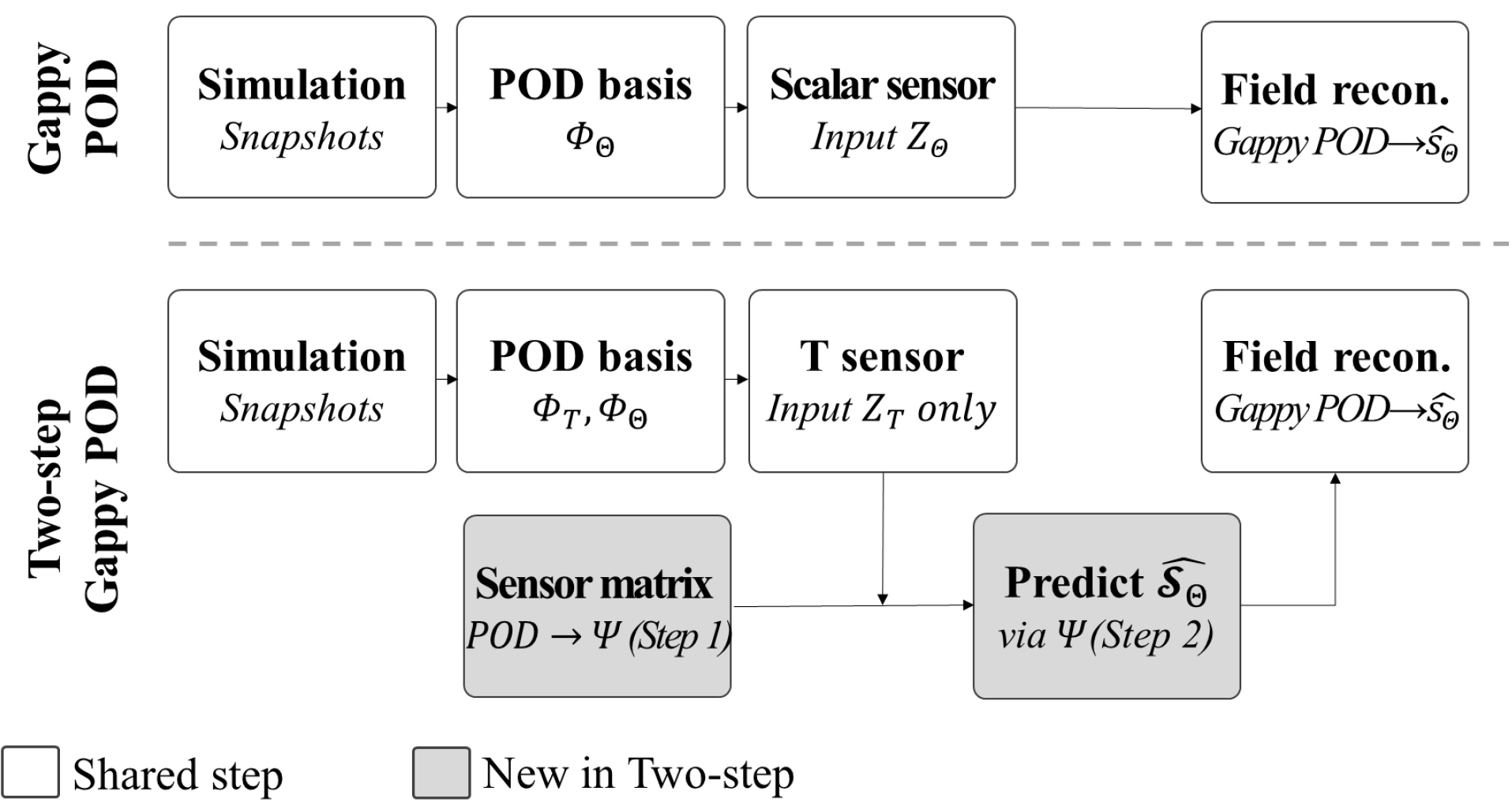
- This study proposes the Two-step Cross-Variable Gappy POD to reconstruct multiple scalar fields from sparse temperature measurements. The method extracts the spatial correlations between temperature and target scalar via POD, predicts the target scalars at sensor locations from temperature inputs and reconstructs the full 3-D scalar field by Gappy POD. The approach is validated for a piloted methane–air turbulent jet flame using OpenFOAM-based parametric snapshot database for reconstruction of temperature, O2, NO, OH, CO, and H2O. The O2 has a strong and spatially consistent correlation with temperature, leading to the reconstruction performance comparable to single-step Gappy POD. In contrast, the OH and CO exhibit near-field deviation due to the local reaction-zone structure and sensitivity to the mixing conditions. The H2O involves a high Pearson correlation coefficient, which does not necessarily guarantee accurate reconstruction of radial gradients and widths of the flame. The NO requires additional scaling correction due to discrepancy in the scales between simulation and measurement. Overall, the Pearson correlation serves as a useful indicator for the Two-step Cross-Variable Gappy POD, while accurate reconstruction requires additional consideration for scalar-specific spatial structures, sensor locations and scale discrepancy between simulation and measurement. - COLLAPSE
-
TWO-STEP CROSS-VARIABLE GAPPY POD FOR MULTI-SCALAR FIELD FROM SPARSE TEMPERATURE MEASUREMENTS IN TURBULENT COMBUSTION
-
Original Article
-
A REVIEW OF CFD-BASED ANALYSIS OF SHIPBOARD BATTERY FIRES AND ECO-FRIENDLY FUEL FIRE/EXPLOSION PHENOMENA
선박 배터리 화재 및 친환경 연료 화재 · 폭발에 대한 전산유체역학 기반 해석 기법의 고찰
-
J. Kim, D. Kang, S. Jung, G.W. Kim, J.-I. Choi
김정우, 강동현, 정수호, 김건우, 최정일
- Decarbonization in the maritime sector is increasing the use of lithium-ion batteries and eco-friendly fuels, including hydrogen, ammonia, and methanol, aboard ships. …
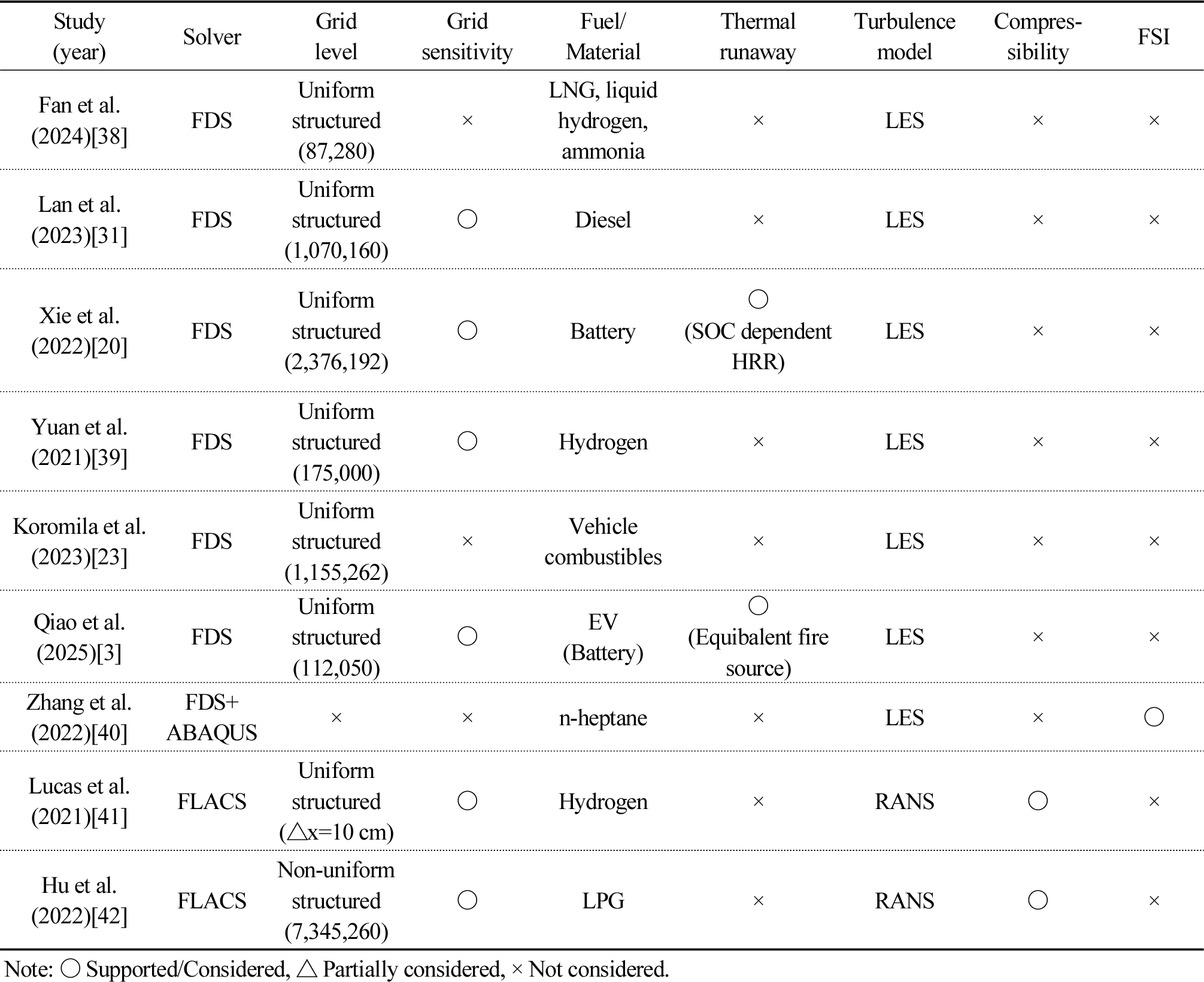
- Decarbonization in the maritime sector is increasing the use of lithium-ion batteries and eco-friendly fuels, including hydrogen, ammonia, and methanol, aboard ships. These energy carriers pose fire and explosion hazards that differ from those of conventional fossil fuels, especially in confined shipboard spaces with uncertain ventilation. Battery-fire scenarios include onboard battery systems as well as electric vehicles transported on Ro-Ro ships, vehicle carriers, and ferries. Computational fluid dynamics (CFD) is widely used to analyze these hazards, but its reliability depends strongly on modeling assumptions, input parameters, and the interpretation of simulation results. This paper reviews recent CFD-based studies on shipboard battery fires and fire/explosion phenomena involving eco-friendly fuels, with a focus on prediction reliability, computational cost, and interpretive limitations. A meta-analysis of 167 recent CFD studies is presented, and the modeling capabilities required for ship-safety applications are identified by fuel type. FDS and FireFOAM are then assessed against these requirements. The review shows that FDS is suitable for validated low-Mach-number fire and smoke simulations but not for compressible explosion phenomena, whereas FireFOAM and related OpenFOAM-based solvers can address this gap, although ship-scale validation remains less mature. The paper concludes that CFD should be used primarily for scenario comparison, sensitivity analysis, and trend identification rather than absolute prediction, and that no single solver can cover the full hazard spectrum of next-generation ships. - COLLAPSE
-
A REVIEW OF CFD-BASED ANALYSIS OF SHIPBOARD BATTERY FIRES AND ECO-FRIENDLY FUEL FIRE/EXPLOSION PHENOMENA

Journal Informaiton
 Journal of Computational Fluids Engineering
Journal of Computational Fluids Engineering


 Korean Society for Computational Fluids Engineering
한국전산유체공학회
#1002, 20, Teheran-ro 25-gil, Gangnam-gu, Seoul 06132, Korea
Tel: 82-2-701-8992 / E-mail: kscfe@kscfe.or.kr Copyright© Korean Society for Computational Fluids Engineering. Powered by APUB
Tel: 82-2-701-8992 / E-mail: kscfe@kscfe.or.kr Copyright© Korean Society for Computational Fluids Engineering. Powered by APUB